In This Article
Watch the video: Why FedRAMP 20x Needs a New GRC Skill Set
If you've spent years doing FedRAMP, you're probably wondering whether that experience still counts under FedRAMP 20x. It does, but it can also get in your way.
We've run into quite a number of seasoned FedRAMP professionals who are really struggling with the change. They want to change, but they're stuck in old thinking. That's a hard place to be after a long career.
Here's what the old approach got wrong, the skill set 20x actually asks for, why spreadsheets won't hold up anymore, and where to start so you can succeed where FedRAMP is going.
Why FedRAMP experience can work against you in FedRAMP 20x
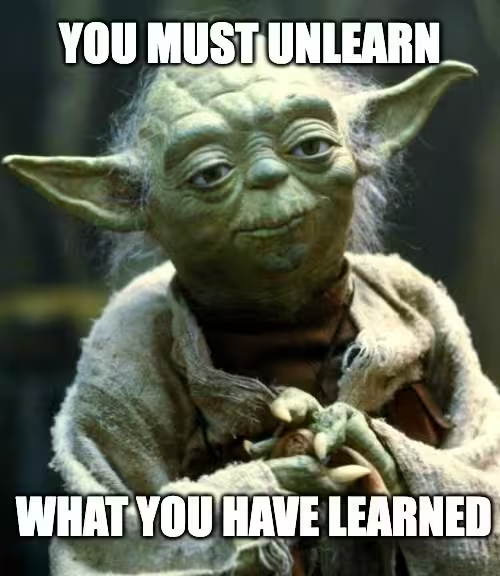
Just like Yoda said, you must unlearn what you've learned. FedRAMP 20x calls for a whole new skill set, and the habits that got people through legacy FedRAMP are the ones holding them back now.
Under the old model, there's a desire to go through all 824 requirements because the thinking was, you must do this. If you had experience, you'd seen something that worked to answer a requirement, and you repeated it. The approach was very prescriptive about what you could do.
The problem is the prescription usually didn't match what was actually in the environment.
So you had to do all sorts of documentation gymnastics to tie it back to another requirement. That's how teams ended up writing "Okta" 72 times in some document, either by hand or with a tool like Paramify.
People taking that traditional approach are finding themselves ill-equipped. The documentation warrior days are over.
FedRAMP's own 20x principles point the same way: they favor informed engineering decisions and continuous evidence over meeting an arbitrary bar.
If you want the side-by-side, see our breakdown of legacy FedRAMP Rev 5 vs. FedRAMP 20x.
The GRC skill set FedRAMP 20x requires: understanding risk
What you need to be is really, really excellent at understanding risk.
You've got to be in security. You need to be at least an inch deep across a mile wide of terrain, and you need to stay hungry, always searching.
The good news is that today you can cover a mile wide and an inch deep, and go even deeper in certain areas, because of AI.
If you want a refresher on the fundamentals, start with what risk management actually is and how risk-based security differs from compliance-based security.
Risk, solution, component, capability: a simpler way to map security
With a strong data layer, the rules are really simple. Four questions replace hundreds of mapped controls:
Those capabilities used to be the controls. Under the old model, you mapped every one of the 824 requirements to these solutions.
But the real question is simpler: what is this thing actually doing?
This is the thinking behind Paramify's Risk Solutions, and it lines up with how KSIs differ from NIST controls in FedRAMP 20x.
Continuous monitoring replaces the 3-year validation cycle
Once you know what each component is doing, you validate it on a continuous basis. Not just every 3 years.
You're continuously validating how each capability is implemented. T
hat shift from point-in-time audits to continuous evidence is the core of where GRC automation is headed.
Why spreadsheets and Word docs don't work for FedRAMP 20x
If you're using just a spreadsheet or a Word document, the agency reviewing your package won't be able to get a reliable result from the scripts and AI it uses to understand your information.
Agencies need deterministic telemetry of how each component is actually implemented:
- What you inherit from the cloud service you're using
- The configurations you've made
- The end-user responsibilities throughout your organization, assuming you're scaling a security program
There are plenty of smaller organizations out there, but what organizations are doing now covers a lot more ground. An inventory of your capabilities, and the components implementing them, is really what this is all about.
The three layers of a modern GRC program
Whatever you're doing, think in three layers:
The agentic layer sits in the middle, between your data and your deliverables.
We got into this fast at Paramify. As a seed-stage company, we hadn't built out every single integration, so MCP was really important for us. Now we can build things so much faster with agents. Having MCP and APIs is a real advantage.
If you're not using AI, that stinks. The pace at which you can now build connectors is incredible. We call them fetchers and validators: pipelines that talk to APIs very specific to each component and how it's implemented.
The speed at which you can build them today is unprecedented.
You need a different skill set, and no one can build it for you
You need to be ambitious and keen on staying ahead of things: making sure your ontology is fleshed out and your continuous monitoring is actually happening.
A GRC platform built for the GRC engineer
Our focus at Paramify is the GRC engineer: building an operating system for them, so you can tailor a solution to any organization and increase transparency.
The data layer, your ontology, is what we're really excellent at.
Here's how that plays out in FedRAMP 20x:
Paramify is FedRAMP 20x Class C Certified, so we run on the same approach we're describing here.
You can see the full picture in what Paramify does and how the Paramify Trust Center publishes your status.
Where GRC professionals should start with FedRAMP 20x
If you've been in this career for 20 years, it's fair to ask what you even do now to start wrapping your head around it. There's real fear of failure when the whole world shifts under you. The best places to start are simple.
Go back to the basics.
The great thing about first principles is that they're first principles. Get a refresher on risk and risk management, and get really dialed in on how you approach and treat risk.
Around the office, we say it a hundred times a day: it's about the data.
Get into the community. Our friends at the GRC Engineering Club talk through these problems all the time, and there are plenty more groups like it. Join FedRAMP's monthly 20x Community Update meetings, which are open to the public. Immerse yourself in it.
You'll find the same thing agencies are finding with 20x trust centers. There are still questions to be answered, but nobody walks away saying they hate the approach. They say it's better. They still need to know the security is good, and they still have extra needs, but directionally, it's right.
As AJ Yawn said on our podcast, the work works.
That's what makes GRC engineering such a gratifying field right now. This is our time. If you're into GRC engineering, FedRAMP 20x is where it's at.
Start building GRC engineering skills
FedRAMP 20x rewards people who understand risk, not people who can rewrite the same answer 100 times. Unlearn the prescriptive habits, map your risks to the solutions, components and capabilities that address them, and validate them continuously with data agencies can actually read.
Start with the basics and find your community. When you're ready for a platform built around that data layer, Paramify can help.
Contact us with questions or request a demo below to see how it works.
Read more
- Ethan Troy on FedRAMP 20x, GRC Engineering, and Building AI Agents
- The Future of GRC Automation: From 'Green Checkmark' Theater to Real-Time Trust
- Risk Solutions Explained
- KSIs vs. NIST Controls in FedRAMP 20x
- You Need a Trust Center for FedRAMP 20x: Here's Why
- Legacy FedRAMP Rev 5 vs. FedRAMP 20x
FAQ
Does FedRAMP experience still matter in FedRAMP 20x?
Yes, but prescriptive habits can hold you back. 20x rewards a strong understanding of risk over mapping every requirement by hand.
What skills does a GRC professional need for FedRAMP 20x?
A solid grasp of risk, broad security knowledge (at least an inch deep across a mile wide), the drive to keep learning, and comfort using AI and data.
What is GRC engineering?
GRC engineering applies engineering practices to governance, risk and compliance: structured data, APIs and automated pipelines that collect and validate evidence continuously.
Why don't spreadsheets work for FedRAMP 20x?
Agencies use scripts and AI to read your information. Spreadsheets and Word docs can't give them deterministic telemetry of how each component is implemented.
What is a data layer in GRC?
It's the structured model of your risks, solutions, components and capabilities. Agents and workflows build on it to produce deliverables.
How often should FedRAMP 20x security be validated?
Continuously, not every 3 years. Each capability should be validated on an ongoing basis.
Where can GRC professionals learn about FedRAMP 20x?
Start with risk management fundamentals, then join communities like the GRC Engineering Club and FedRAMP's monthly 20x Community Update meetings.