In This Article

We are currently in the 'Dark Ages' of compliance automation. While tools have made it easier to generate reports, they have often replaced rigorous security with superficial 'green checkmarks.' True maturity in Governance, Risk, and Compliance (GRC) will require moving away from static PDF reports to real-time, transparent Trust Centers that aren't afraid to show the occasional failure.
For decades, the industry has operated under a "point-in-time" delusion. We spend months preparing for an audit, take a snapshot of a pristine environment, and then drift into insecurity the moment the auditor leaves. The Future of GRC Automation is not about faster reporting; it is about the fundamental shift from static observation to Continuous Monitoring (ConMon).
The Future of GRC is Here
It’s time to transition from analog, periodic auditing to digital, continuous assurance. Instead of relying on annual assessments (like SOC 2 reports) that age instantly, next-generation GRC utilizes API-driven Continuous Monitoring to provide real-time visibility into an organization's security posture.
This shift is epitomized by initiatives like FedRAMP 20x, which uses standardized data formats like OSCAL to automate assessments, reducing compliance costs while increasing the fidelity of risk management data.
Here’s why we need the change and what you can expect to see:
The Illusion of Security: The Decline of SOC 2
The current commercial compliance market is suffering from a crisis of credibility. As automation tools have flooded the market, the cost — and arguably the value — of standards like SOC 2 has plummeted. What was once a six-figure rigorous assessment has, in some corners of the market, become a commodity that can be bought for pennies on the dollar.
This commoditization creates a dangerous "illusion of security." Third-Party Risk Management (TPRM) teams are inundated with reports that technically "pass" but offer zero insight into the actual engineering reality of the vendor.
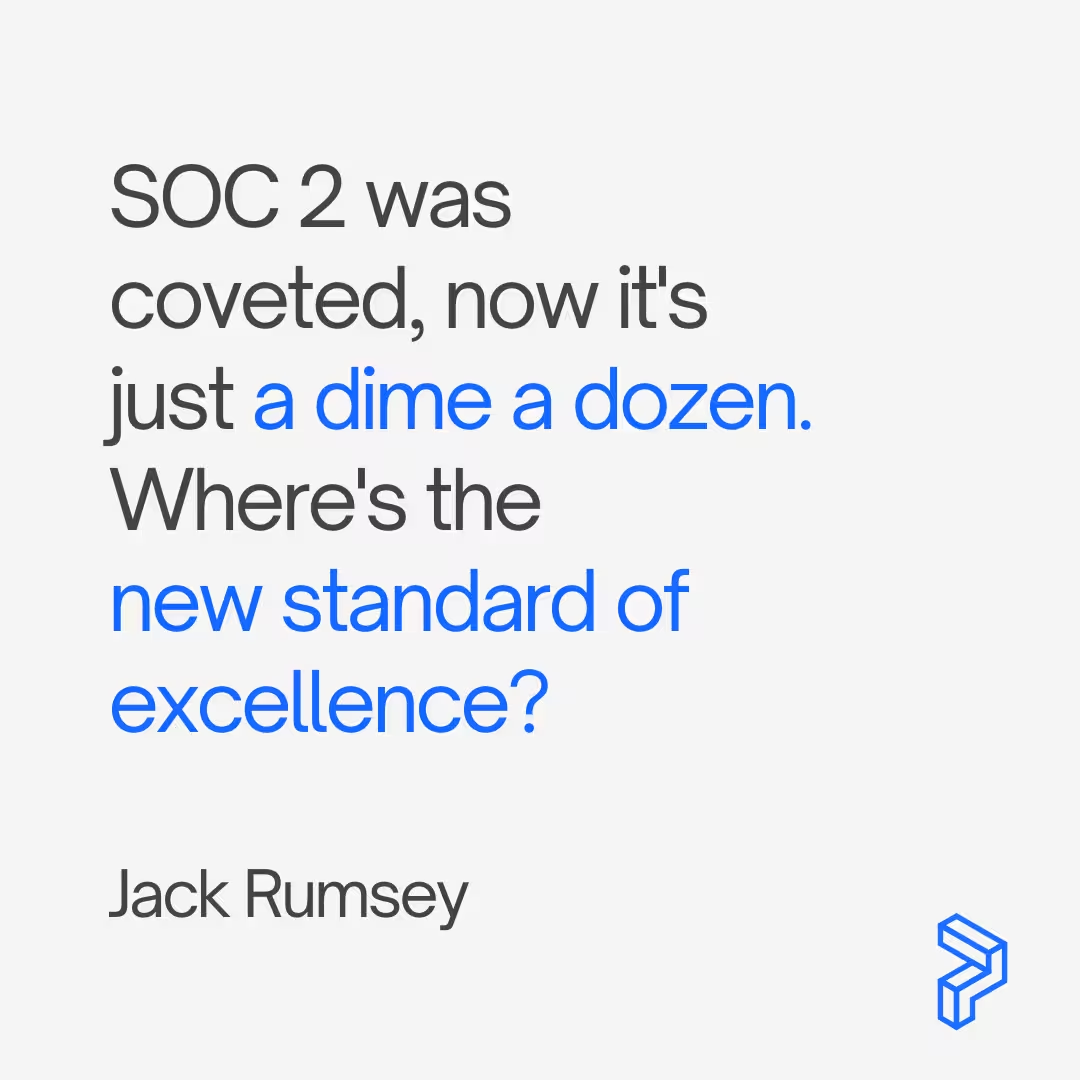
"Now we're at this race to the bottom where it's like people are handing this stuff away for free... The entire integrity [of the audit] is challenged. It’s an incentives game. At first, SOC 2 was coveted... Now it's just a dime a dozen. So where's the new standard of excellence?"
— Jack Rumsey, Head of GRC at Swimlane
The incentive structure is broken too. Vendors are incentivized to hide flaws to get the deal signed, and TPRM teams are incentivized to accept the "industry standard" report to avoid blocking revenue. This creates a cycle where "green checkmarks" override genuine risk assessment.
The Trust Center Revolution: Radical Transparency
If the static report is dead, what replaces it? The answer lies in Real-Time Trust Centers.
Currently, most "Trust Centers" are little more than marketing landing pages, just mockups designed to pacify prospects.
The visionary shift involves treating security status like site reliability status. Just as engineering teams look at status.openai.com or status.aws.com to check for outages, security teams need a live feed of control effectiveness.
True automation isn't about ensuring a control never turns red; it is about detecting when it does and automating the remediation workflow.
"It's not until the trust center adopts it in a transparent way where you can get a real-time picture of an environment... We need to get to something that's more like status.openai.com... It turns out if I go to status, I could go, 'It turns out that there's an issue here.' That doesn't happen with security because we've made it taboo to miss something."
— Kenny, Founder and CEO at Paramify
In the long term, the market will reward companies that display this radical transparency.
A Trust Center that shows a control failed at 2:00 PM and was remediated by automation at 2:05 PM is infinitely more trustworthy than a PDF from six months ago claiming everything is perfect.
→ Is FedRAMP 20x right for you?
FedRAMP 20x as the Catalyst for Innovation
.avif)
The federal government may be considered the most "bureaucratic" sector, but it’is currently leading the charge in GRC automation.
FedRAMP 20x represents a massive modernization effort. By mandating machine-readable assessments (using OSCAL) and continuous monitoring data, the government is setting a bar that is significantly higher than the commercial SOC 2 world, yet more attainable for innovative startups.
FedRAMP 20x changes the game by:
- Lowering the barrier to entry for startups through automation.
- Enforcing rigorous standards that commercial audits often gloss over.
- Validating merit over tenure: A small startup with excellent automated security can compete with legacy incumbents.
"That's where 20x... if done correctly, changes the game. Because it's an automated assessment and because they're going to bring down the cost... it's more attainable for someone who's real, who wants to be like, 'I'm competing for real companies and we have real security behind this.'"
— Jack Rumsey, Head of GRC at Swimlane
But, commercial entities dragging their feet on this level of data-driven compliance will find themselves obsolete. The "moat" of understanding complex, manual bureaucracy is drying up.
The new moat is engineering excellence.
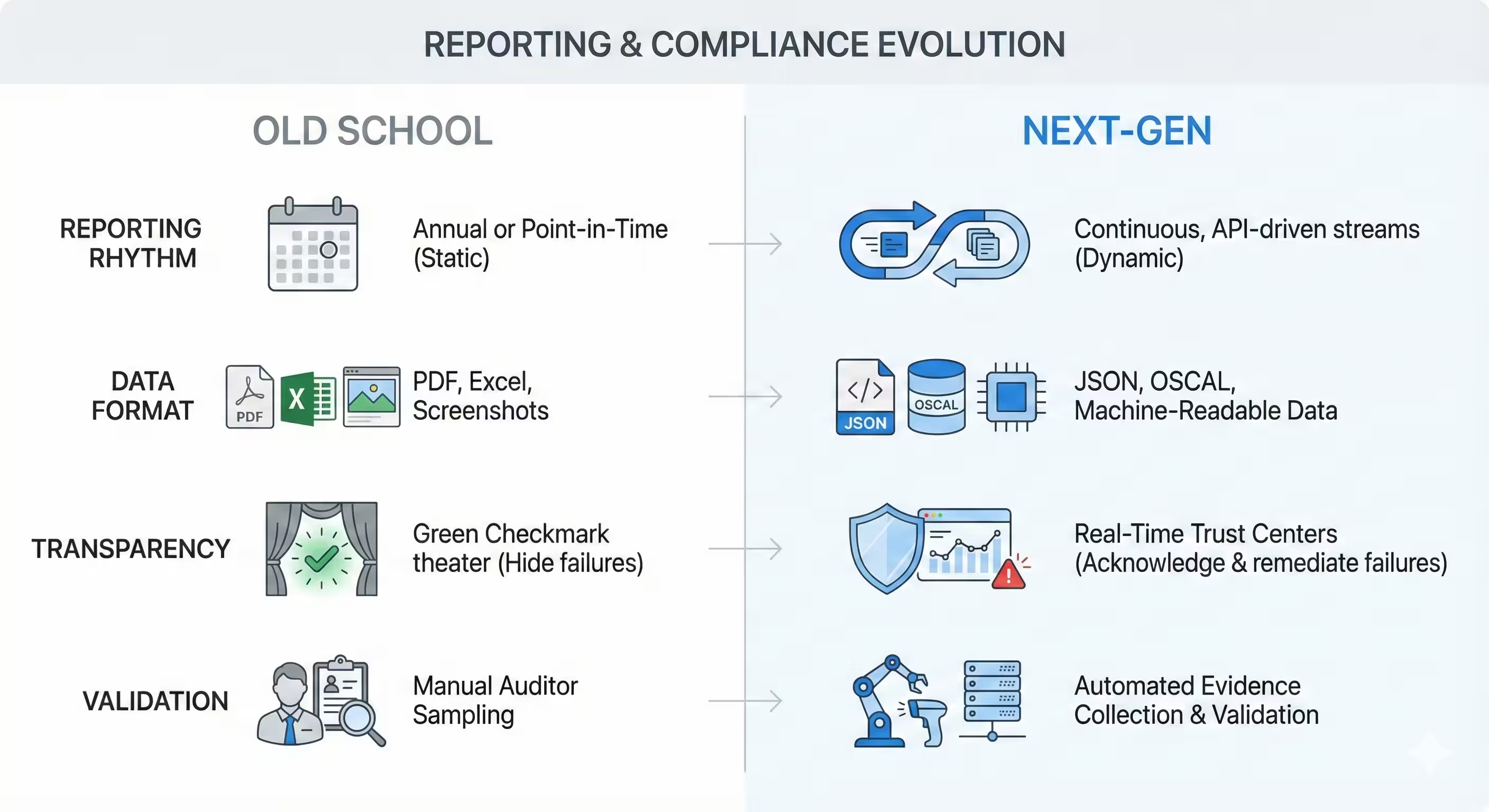
Old School Compliance vs. Next-Gen Automation
To visualize this shift, we must look at the operational differences:
- Reporting Rhythm:
- Old School: Annual or Point-in-Time (Static).
- Next-Gen: Continuous, API-driven streams (Dynamic).
- Data Format:
- Old School: PDF, Excel, Screenshots.
- Next-Gen: JSON, OSCAL, Machine-Readable Data.
- Transparency:
- Old School: "Green Checkmark" theater (Hide failures).
- Next-Gen: Real-Time Trust Centers (Acknowledge and remediate failures).
- Validation:
- Old School: Manual Auditor Sampling.
- Next-Gen: Automated Evidence Collection & Validation.
→ Ready to grow revenue & improve your security? Find out if 20x is right for you.
Join the Future of GRC
The era of the $100,000 SOC 2 status symbol is over. The market has corrected, and the result is a commoditized asset that no longer differentiates your brand. To stand out in a crowded SaaS market, you must embrace a higher standard.
FedRAMP 20x is not just a path to government contracts; it is the new mechanism for proving you are an enterprise-grade player in a world of check-the-box pretenders.
Automate, modernize, and improve your security the easy way with Paramify.
Schedule your demo to find out how easy it can be or request a demo video below to watch at your own convenience.
Let us know if you have questions, we love to help.
Frequently Asked Questions
What is FedRAMP 20x?
FedRAMP 20x is a strategic initiative to modernize the Federal Risk and Authorization Management Program. It leverages automation and machine-readable data to reduce the time and cost of achieving federal security authorization by up to 20x, making it accessible to smaller, innovative startups.
We recommend you choose a GRC tool with these 5 features to succeed at FedRAMP 20x:
- Emphasis on information assurance
- Automated evidence collection and validation
- Transparency and clear processes
- Balance between automation and manual attestations
- Flexible validation scheduling
What are the benefits of a dynamic Trust Center?
Unlike static pages, a dynamic Trust Center connects directly to security tools to display real-time control status.
This builds genuine trust with customers by proving Continuous Monitoring capabilities and transparency, rather than relying on outdated audit reports that may hide current risks.
How does automation impact Third-Party Risk Management (TPRM)?
Automation shifts TPRM from a "form-filling" exercise to a data analysis function. Instead of manually reviewing questionnaires, TPRM teams can ingest real-time security data feeds from vendors, allowing for instant risk scoring and faster procurement cycles without sacrificing security depth.

.svg)
.svg)