In This Article
If you missed the FedRAMP 20x Community Update on February 11, don’t worry, we’re here to get you the details you need to know.
The biggest takeaway? The days of guessing what the PMO wants next are coming to an end.
Here’s what’s coming down the pipe for compliance leaders and engineering teams.
The FedRAMP 20x Cheat Sheet:
- CR26: The "Consolidated Rules 2026," a stable baseline of rules launching in May 2026 intended to last 2.5 years.
- SCN (Significant Change Notification): The new process replacing agency sponsors for continuous monitoring changes.
- RFC-0024: The proposal mandating machine-readable authorization packages (OSCAL).
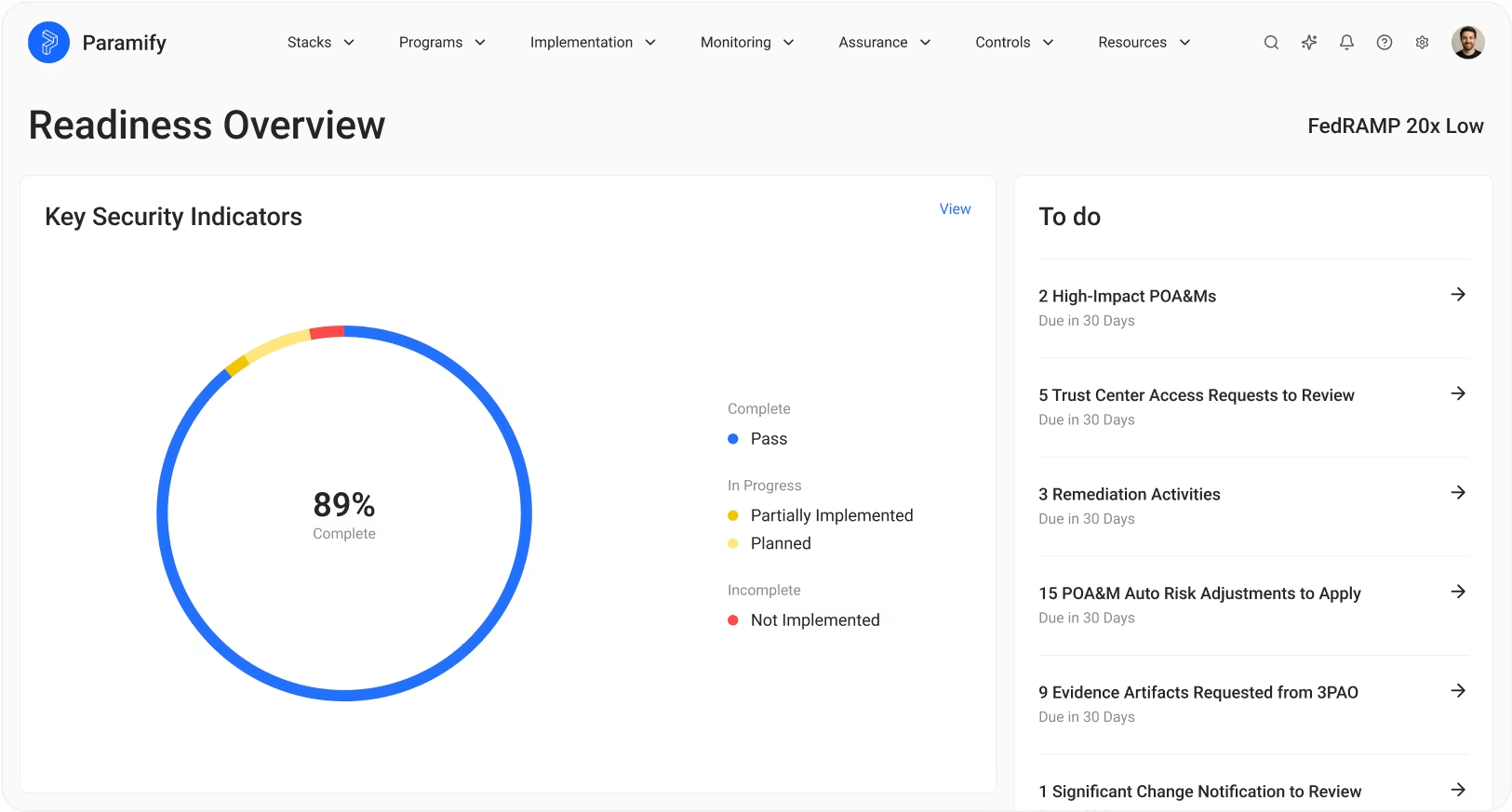
- KSI (Key Security Indicators): The specific, verifiable data points replacing vague narratives in 20x assessments.
1. The "CR26" Roadmap: 2.5 Years of Stability
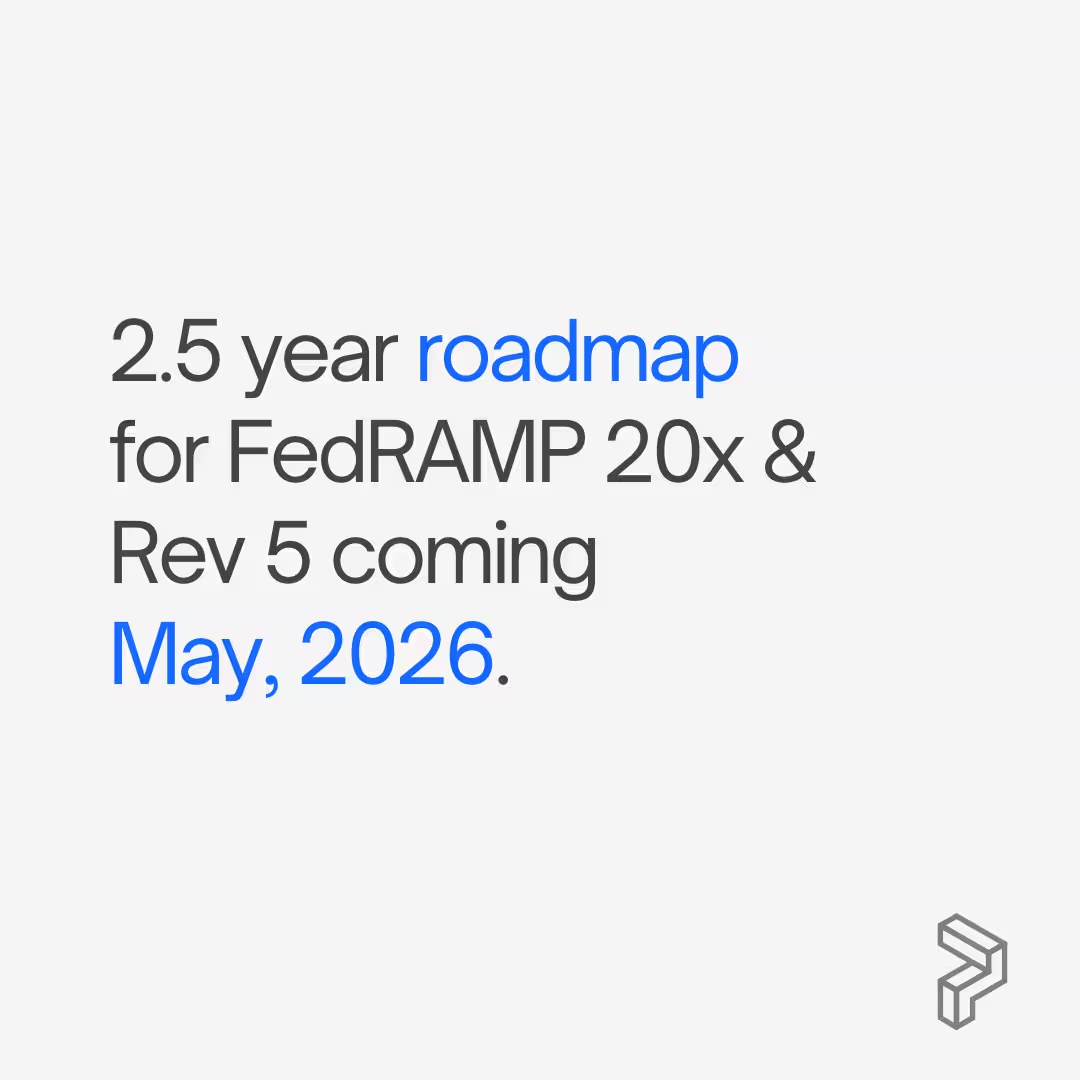
The biggest news here is the announcement of Consolidated Rules 2026 (CR26).
The PMO plans to release a comprehensive set of rules that will cover updated Legacy Rev 5 requirements and the finalized 20x rules for Class B and C baselines.
These rules should be finalized in May, 2026, with the adoption window closing late in the year. Once in place, the PMO intends for this baseline to remain stable for two and a half years.
For the first time in a long time, we are getting a predictable roadmap for FedRAMP. This should enable you to budget and plan for 2027 and 2028 without fearing the ground will shift beneath you 6 months later.
2. The "Sponsor-less" Future is Here

We are seeing a massive shift in how continuous monitoring works. The program is moving away from the traditional agency sponsor model for ongoing changes and toward the Significant Change Notification (SCN) process.
Once you adopt the SCN process, the concept of a sponsor reviewing every change disappears. This aligns with the new Continuous Monitoring (ConMon) requirements that focus on data availability over manual approval.
Instead of waiting months for a specific agency to approve a new feature, you notify them. This is a massive win for feature velocity. It puts the control back in your hands to serve your customers without the bureaucratic bottleneck — as long as you are transparent and doing the work.
3. Manual Documentation is Becoming a Liability

The shift toward machine-readable data isn't about checking a box for OSCAL. Pete, Director of FedRAMP, made a critical point about the "copy-paste" nightmare of legacy documentation.
He notes that if you are a CSP with multiple service offerings, trying to maintain 20 different Word-based System Security Plans (SSPs) manually is practically impossible.
We were honored to be name-checked here. Pete Waterman mentioned that Paramify is one of the top tools being "reused" by others in the pilot. Even the most sophisticated tech companies don’t want to manage 20 different Word docs for 20 different services.
They want a single source of truth that outputs machine-readable data (like the new SDR) and that’s what Paramify provides with our unique Risk Solutions platform.
Even the PMO struggles with manual data — calling their current internal tracking system as "the world's most complicated spreadsheet".
This is exactly why we built Paramify — to solve the documentation bottleneck that puts the focus on busy work, instead of security.
With the government moving away from unstructured data because it's unmanageable, we need to do the same.
→ Learn the easiest way to automate your SSP or get started with FedRAMP 20x
4. KSIs are Key
The Phase 2 pilot participants have been showing some serious "hustle," and the learnings are flowing both ways. The working group described the current sessions as a "big nerd out" on Key Security Indicators (KSIs).
As a team going through the Phase 2 pilot ourselves, we’ve seen firsthand how the new KSIs are shifting the goalposts.
The PMO is moving toward deterministic telemetry. This means replacing Word docs with JSON or XML data that actually proves your security posture, rather than just describing it.
It’s challenging, but it clarifies exactly what "good" looks like.
→ Not sure how your security posture lines up with new KSIs? Find out with Paramify.
5. Security Training: Walking the Walk
One of the pilot participants shared that their executives are required to take the exact same cyber awareness training as every other employee.
No exemptions, no "I'm too busy" excuses.
It’s a simple thing, but as the PMO noted, it shows those leaders are "walking the walk". If you want to signal to your engineering and compliance teams that security matters, this is a powerful, zero-cost way to do it.
The Future of GRC
Government agencies are about to realize how much easier and better automated data is. Once this happens there will be a natural shift away from manual, static compliance reporting. Not because it’s mandated, but the manual process is too painful in comparison.
We suggest: Move to automated reporting early to stay competitive. The process is simple and affordable with a tool like Paramify.

How We Can Help
The shift to verified data (KSIs) is tricky. We are currently mapping these new rules for our Phase 2 pilot and for others in our cohort.
If you want to see how we turn 'the world's most complicated spreadsheet' into a streamlined automated package, schedule a deep dive with us below. We’ll nerd out on the details so you don't have to.
Frequently Asked Questions about FedRAMP 20x Changes in 2026
When is the CR26 deadline?
The PMO is targeting a May 2026 release for the Consolidated Rules. Once finalized, the window for adoption closes late in the year.
Does FedRAMP 20x require an agency sponsor?
The program is transitioning to a "sponsor-less" model for ongoing changes via the Significant Change Notification (SCN) process, though initial authorization may still involve agency collaboration.
Can I use Paramify without an advisor?
Paramify automates documentation and strategy, but we often partner with advisors for implementation support. We can match you with a premier partner if your security program needs extra hands.
Watch the FedRAMP 20x Community Update Here:

.svg)
.svg)