In This Article
If you're in the FedRAMP world, you've probably heard a new term floating around: SSDR. It stands for System Security Decision Record, and it's changing how cloud service providers document, prove, and maintain their security posture.
If the old way of doing things (massive Word docs, static PDFs, endless narrative) ever made you want to flip a table, the SSDR is the answer you've been waiting for.
Here's a quick breakdown of what it is and what this change means:
Prefer video? See Isaac explain the SSDR change in less than 2 minutes.
So What Exactly is an SSDR?
A System Security Decision Record (SSDR) is a machine-readable document that captures the security decisions that have been made for a system.
But it goes beyond just listing decisions. It provides continuous evidence showing how those decisions are actually implemented in practice. Think of it as a living ledger of your security posture.
An SSDR gives auditors and assessors the ability to look at your security package and immediately understand two things:
- What decisions your security team has made
- How the controls for your system are actually functioning. Not how they're supposed to function. How they actually function, backed by real evidence. This is a big deal.
How is an SSDR Different from an SSP?
Using an SSP to track security decisions
If you've been through a FedRAMP certification before, you know the System Security Plan (SSP).
It's been the standard for years: a narrative document, usually delivered as a Word doc or PDF, describing how your system intends to meet each security control.
This narrative format has some real limitations: SSPs are static snapshots. You write it, you export it, and the moment you do, it starts going stale. Keeping it accurate means constant manual updates.
SSPs describe intent, not evidence. They tell an assessor what should be happening. That's a statement of hope, not proof.
SSPs aren't machine-readable. A human has to sit down and read through 100+ pages to review your security posture. That's slow, error-prone, and doesn't scale.
Proving security implementations with an SSDR
The SSDR flips all of this on its head. Instead of a static narrative, the SSDR moves toward a continuous, machine-based method where GRC professionals can see a record of the decisions that have been made and continuous evidence of how those decisions are implemented.
It's delivered in formats like OSCAL (JSON, YAML) that can be ingested by tools, displayed in dashboards, and monitored over time.
→ Learn more about the differences between SSPs and SSDRs.
The Core Focus of the SSDR
The focus of a SSDR comes down to two things:
1. Continuous, ongoing assurance
The SSDR provides real-time visibility into whether your controls and evidence are actually in place.
Continuous proof that your security decisions are working rather than a point-in-time snapshot or narrative written six months ago.
2. Understanding the decisions behind the security
Every system has a security team making decisions about how to implement controls, manage risk, and reduce exposure. The SSDR creates a clear, auditable record of those decisions so that anyone reviewing the system, whether it's an assessor, an auditor, or an internal stakeholder, can understand why things are configured the way they are.
This is what makes SSDRs so powerful for continuous monitoring. Instead of reviewing a document and trusting that it's still accurate, reviewers can see living, machine-readable evidence that the security decisions are functioning as intended.
Why This Matters for Your FedRAMP Certification
The shift from SSPs to SSDRs is part of a broader modernization of the entire FedRAMP program, driven by initiatives like FedRAMP 20x and the CR26 requirements.
Here's the practical takeaway: if you're pursuing FedRAMP Certification or maintaining an existing one, the direction is clear. FedRAMP is moving toward machine-readable, evidence-based documentation.
Organizations that prepare for this shift now will have a significant head start when it becomes the standard.
Paramify Is Built for the SSDR Future
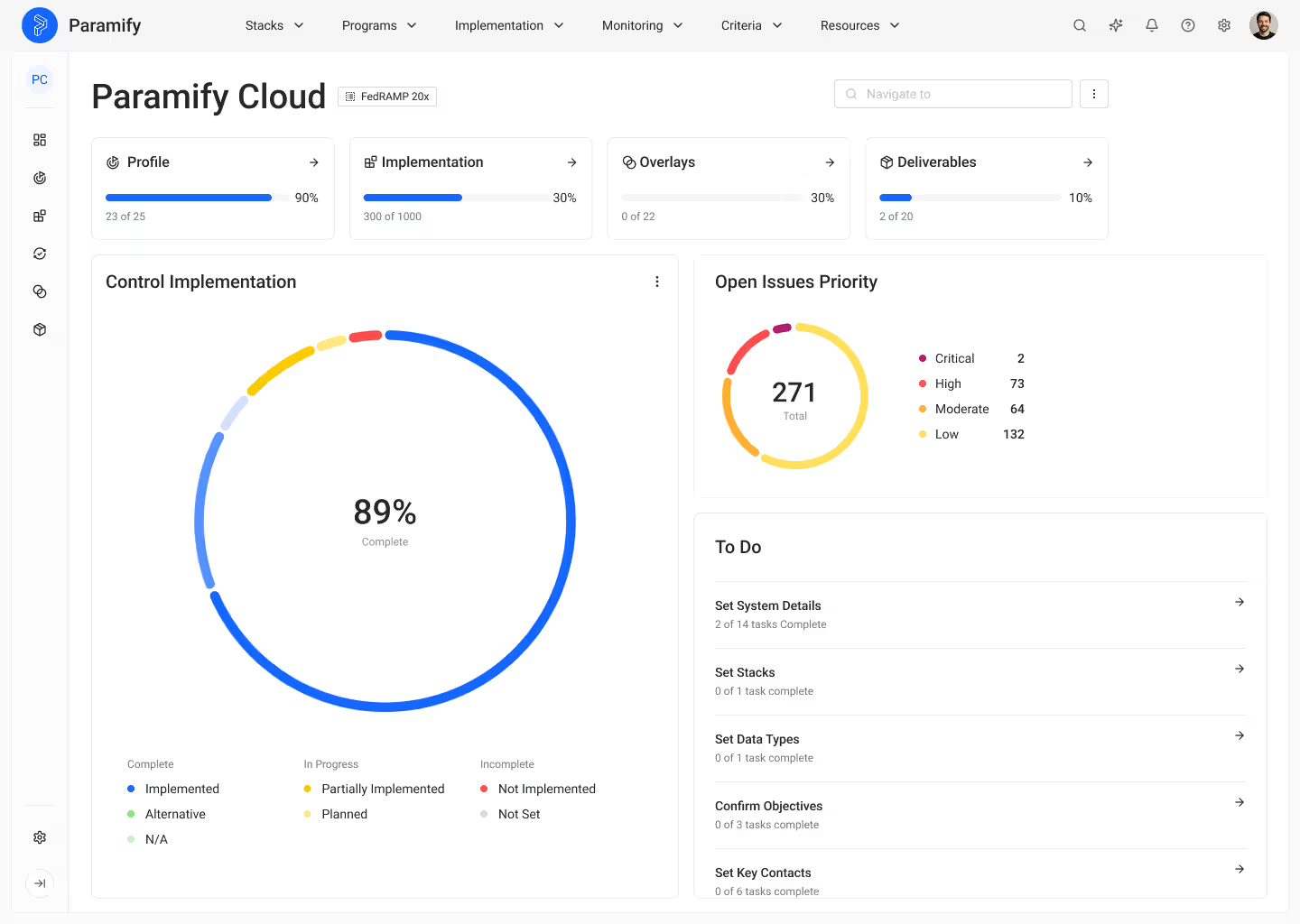
Paramify isn't just an SSP generator. We're built for SSDRs too. Our ontology-driven approach captures your security decisions as structured, machine-readable data from day one. That's the exact foundation that SSDRs require. While other tools lock your decisions inside narrative paragraphs in a Word doc, Paramify organizes them as structured data from the start. What this means for you:
- Need an SSP today? Paramify generates accurate FedRAMP High SSPs in hours, not months.
- Need an SSDR tomorrow? The same structured data that powers your SSP can be output as a machine-readable SSDR. No rework. No starting over.
- Need both? Paramify handles both formats from a single source of truth, so you're not doubling your effort during the transition. Most compliance tools were built for the SSP world: narrative documents, Word templates, manual descriptions. Paramify was built for what comes next. The fact that we generate great SSPs today is almost a side effect of how we've structured the underlying data. This is exactly why FedRAMP leadership has recognized Paramify as the program moves toward automation and machine-readable documentation.
→ Want to see what SSDRs look like in Paramify? Watch a demo video or request a live demo and we'll walk you through it.
Frequently Asked Questions
What does SSDR stand for?
SSDR stands for System Security Decision Record. It's a machine-readable document that captures the security decisions made for a system and provides continuous evidence that those decisions are implemented and functioning.
How is a SSDR different from an SSP?
An SSP (System Security Plan) is a narrative document describing how controls are intended to be implemented. A SSDR captures the actual decisions that have been made and provides continuous, machine-readable evidence that those decisions are functioning in practice. Learn more about SSDRs vs SSPs.
What format is a SSDR in?
SSDRs are delivered in machine-readable formats like OSCAL, specifically schema-based JSON or YAML files. They're designed to be ingested by GRC tools and parsers that can display the data in dashboards and track trends over time.
Why are SSDRs better for continuous monitoring?
Because SSDRs are machine-readable and evidence-based, they can be continuously ingested and evaluated by tools. This gives assessors and security teams real-time visibility into whether controls are functioning, instead of relying on a static document that may be months out of date.
Can Paramify generate SSDRs?
Yes. Paramify's ontology-driven architecture captures your security decisions as structured data from day one. The same data that generates your SSP can be output as a machine-readable SSDR. You don't need separate workflows or tools for each format. Schedule a demo to see it in action.

.svg)
.svg)